
Digital, UI/UX, Website2026
HopeLooom
- Client
- HopeLooom Mental Health Services
- Industry
- Mental Health & Counselling
- Services
- Website DesignWeb DevelopmentLocal SEOOnline Booking
- Live Page
- Open Project
Case Study
A calmer first step into counselling.
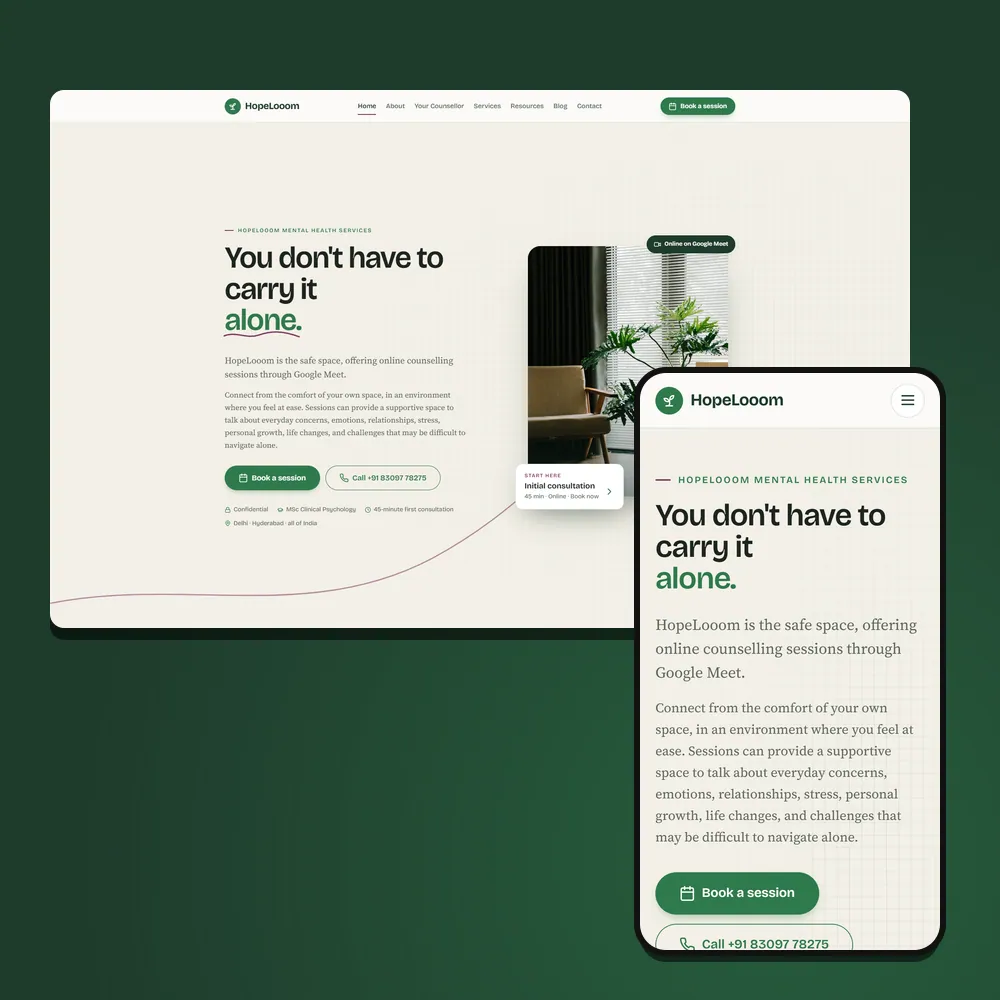
HopeLooom is the online counselling practice of psychologist Somesh Saurav, with sessions held over Google Meet. People often arrive at a site like this on a hard day. The design had to lower the stakes, answer the practical questions before they're asked, and make booking a session feel like a small, safe step.
01
The Challenge
Most websites can afford to be loud. A counselling practice can't. The person reading may be anxious, low or in the middle of a hard change, and every extra decision — or every flash of hard-sell — is a reason to close the tab. HopeLooom's earlier version was a React app with Firebase and live news feeds: more machinery than the job needed, and little of it working toward the one thing that mattered.
The practice needed three things from its site: to be found by people searching for counselling in Delhi, Hyderabad and across India; to answer the quiet questions — what happens in a session, what it costs, whether it's confidential — before anyone has to ask; and to make booking easy enough to do in a single sitting.
02
The Approach
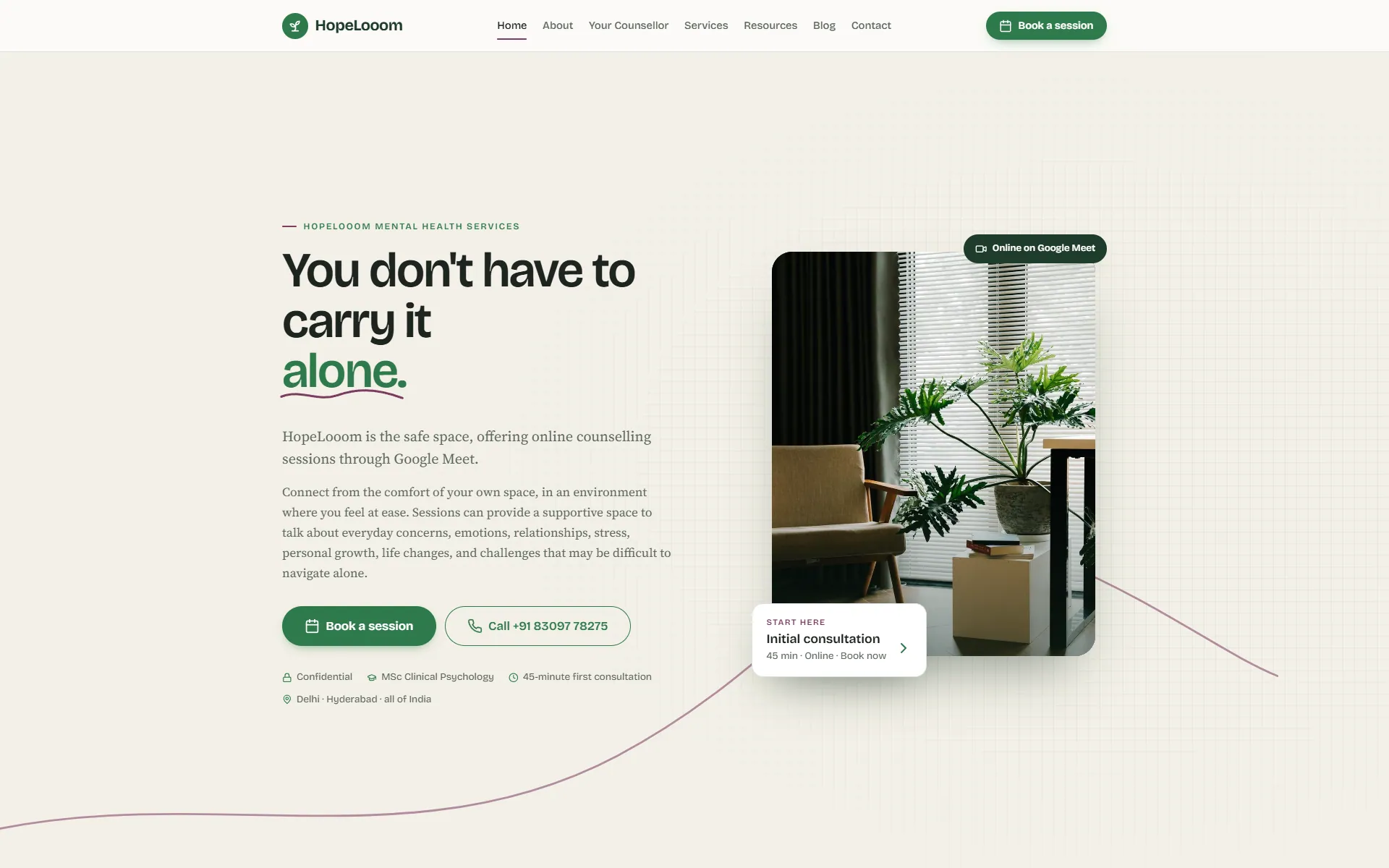
The name gave us the design: a loom. The palette is woven from textile tones — warm linen backgrounds, moss and fern greens, a soft sage, a single mulberry accent — with Bricolage Grotesque for headings and Source Serif 4 for the reading text, so long paragraphs feel like a letter rather than a brochure.
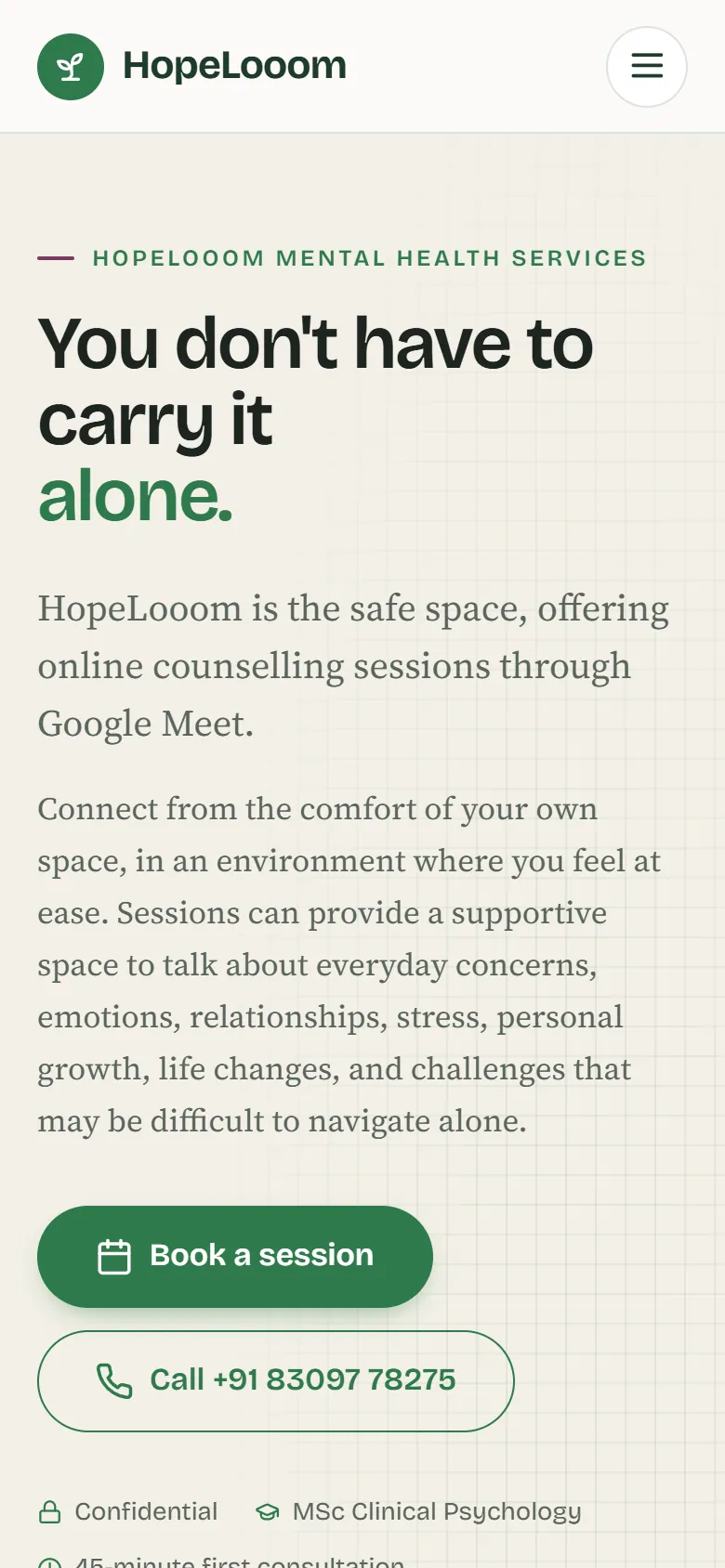
We rebuilt the site as plain static HTML, CSS and JavaScript: no framework, no sign-in, no backend, and nothing heavy to load on a phone with a weak signal. A small build script keeps the shared header, footer, sitemap and structured data in one place, so new pages and posts slot in without touching the rest.
Low stakes by design
Calm colours, generous space and one gentle call to action — nothing that feels like a sales funnel.
Answers before asking
How sessions work, fees, confidentiality and FAQs, all on the page before booking.
Found where they search
Landing pages for the concerns people bring, plus Delhi and Hyderabad pages for local search.
03
The Solution
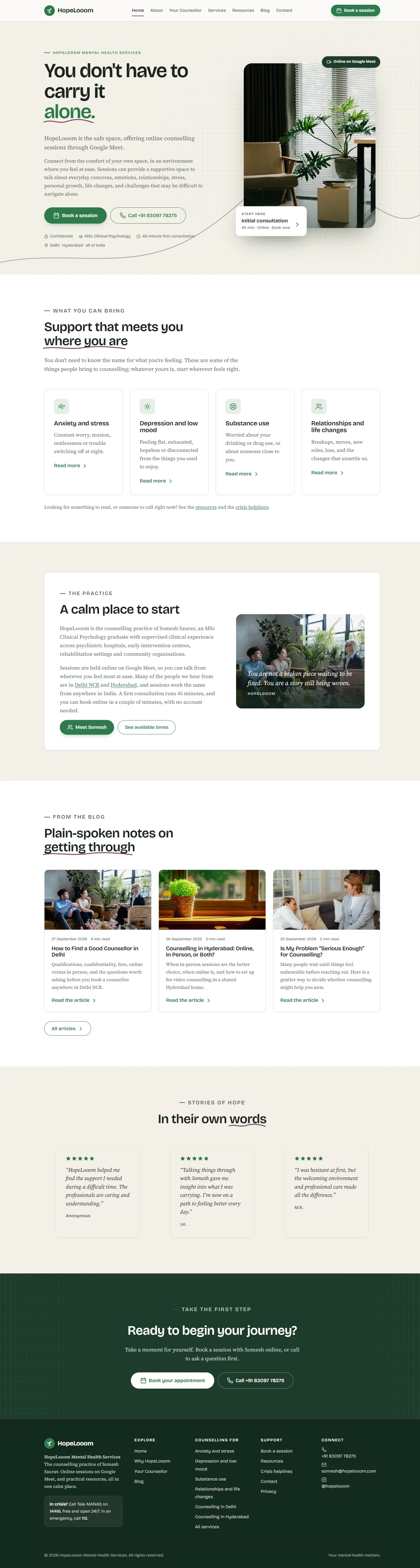
The homepage opens on the sentence the practice exists to say — You don't have to carry it alone — with booking and calling side by side and the confidentiality and qualification notes directly beneath. From there the site branches the way people actually arrive: landing pages for anxiety, depression, substance use and life changes; pages for Delhi and Hyderabad; a services hub covering how it works, fees and FAQs; and a profile of the practitioner with the session types you can book.
A resources page offers more than links: a curated reading list, India's crisis helplines, and a guided box-breathing exercise that works right on the page. Booking runs through VoltsBook — deep links open it with the right session already selected, and the session lists on the site are generated from the VoltsBook catalogue, so the website and the booking system describe the same sessions. Every page carries structured data for the practice, the practitioner, services, articles, breadcrumbs and FAQs, and analytics run with advertising features switched off.
04
In the Client's Words
"One of the best experience i had while getting work done by them ,their team is professional, on time."
— Somesh Saurav, Psychologist, HopeLooom

Collaboration
Got a project?
Let's talk.
We're a team of creatives who are excited about unique ideas and help companies to create amazing identity by crafting top-notch UI/UX.