
Websites for Manufacturers
Manufacturing website design that turns spec checks into qualified RFQs
Before an engineer or a buyer picks up the phone, they've already checked your capabilities, your tolerances and your certifications — on your website, often on a phone between meetings. We build manufacturing websites that pass that inspection and end in a quote request your estimators can actually price.
URLs carried over in a full-site rebuild we shipped in 2026 — the SEO you've earned survives the redesign
mobile PageSpeed after a rebuild we shipped in October 2026 — speed engineers notice on a phone
credit application with e-signature built to US ESIGN/UETA rules, in a B2B rebuild we shipped
from scoping call to a fixed, itemized quote that holds unless the scope changes
Sound familiar?
The Problems That Quietly Cost You Customers
Specs locked in PDFs
An engineer searching a part number or a material grade can't find you if your spec data lives only in downloadable PDFs. Search engines index pages, and buyers skim tables — neither reads a 40-page catalog.
RFQs that can't be quoted
A generic contact form returns "please quote attached" with no quantity, no material and no drawing. Your estimators spend the first round of every deal just finding out what's being asked.
A redesign that loses rankings
Years of part-number pages and datasheet links quietly earn search traffic. Rebuild without mapping those URLs and the new site launches looking better while the pipeline goes quiet.
Who's evaluating you
Five people check your site before anyone calls
Manufacturing sales rarely start with a conversation. A design engineer checks whether you can hold the tolerance. A procurement manager checks certifications, capacity and location. Plant operations wants to know lead times. A distributor wants to know whether you sell through partners. And increasingly, a machinist or welder is checking whether you're somewhere worth working.
Most manufacturer websites are written for none of them — a homepage of stock factory photos and a paragraph about quality. Good manufacturing website design gives each of those five people a fast path to the answer they came for, and a reason to send the drawing to you instead of the next supplier on their list.
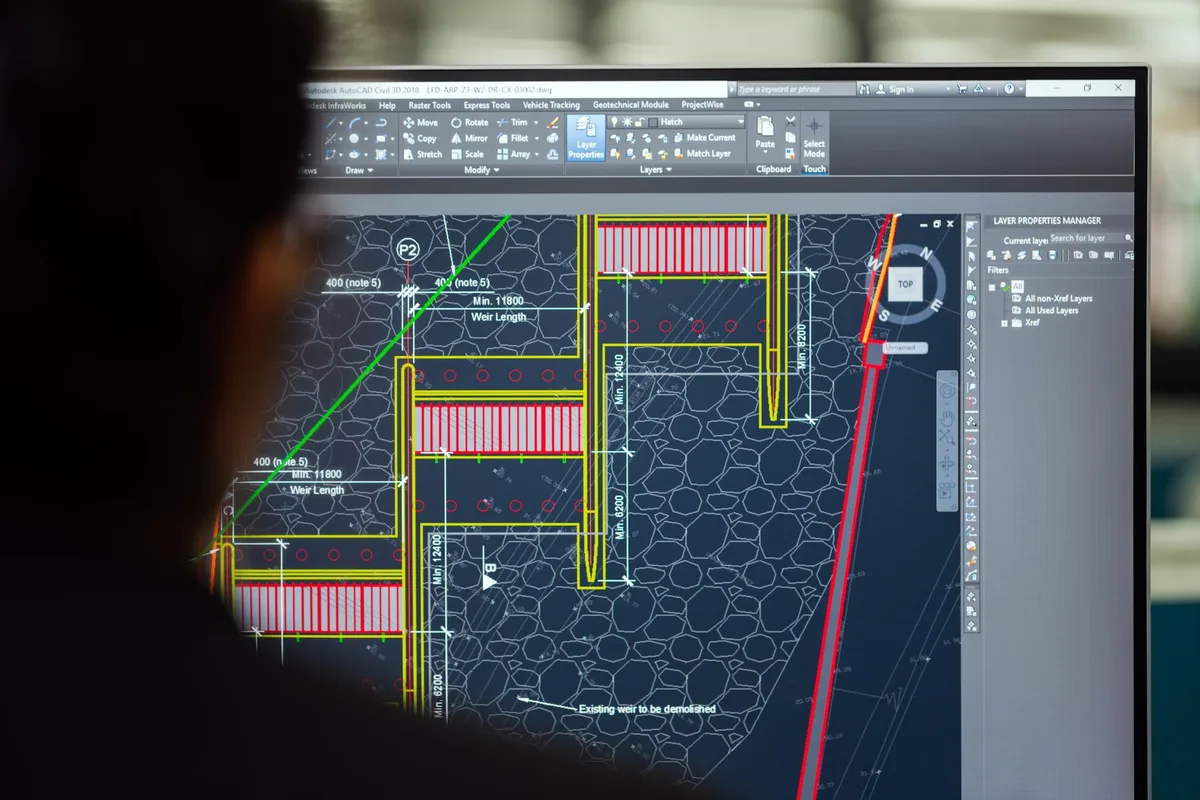
Capabilities and catalogs
Spec data engineers can search, scan and trust
If you sell products, every product and part deserves its own page: a clean URL with the part number in it, a spec table in real HTML, the CAD files and datasheets an engineer needs, and a revision note when something changes. That's what makes a part-number search land on your page, and what lets a buyer compare you against a competitor in thirty seconds.
If you're a contract manufacturer or job shop, the capability is the product. Instead of a catalog, we build capability pages around processes, materials, machines and tolerances, with real photos of the work and the industries you serve — the evidence an engineer needs before they trust you with a drawing.
Quote requests
An RFQ flow that produces a quotable request
A quote request should arrive ready to price. We design RFQ forms around the questions your estimators ask first — part or process, material, quantity and annual volume, tolerances, finish, target date — and accept the drawing as an upload, so nobody chases attachments over email.
Uploaded drawings are often confidential, so they're treated that way: stored privately rather than on a public web path, reachable only by your team, with an optional NDA acknowledgement before the upload. If your work is export-controlled, those storage and access rules follow your compliance program, and we'll tell you plainly when a web form is the wrong channel for a file. The confirmation tells the buyer when to expect an answer, and the request lands in your CRM with everything attached.
We've built this pattern in production: a quote flow where customers upload photos of the job so it can be priced without a site visit, and a four-step credit application signed online, with a sealed PDF and e-signature built to US ESIGN/UETA rules, for a freight company — B2B paperwork, done properly online.

Redesigns
Rebuild the site without losing your part-number rankings
This is where manufacturer redesigns go wrong. An older site often has hundreds of part, product and datasheet URLs — including PDF links that distributors and engineers bookmarked years ago — and each one carries search value. Launch a new site without mapping them, and the traffic that used to arrive at those pages hits a 404.
We inventory every existing URL before design starts, carry over the ones that work, and permanently redirect the rest to their closest successor. On one 2026 rebuild, all 43 existing URLs made the move; on a 59-page B2B rebuild, every old URL was tested to resolve before launch. The new site should look better and keep everything the old one earned.
Proof and people
Certifications, careers and export markets
Quality engineers verify. Show each certification with its scope, the certificate number, the registrar and the expiry date, and offer the certificate as a download — it turns a logo into evidence and saves a round of supplier-qualification emails.
Hiring is the other job your website now does. A careers section with real photos of the floor, the shifts, the pay structure where you can share it, and the training you offer will recruit better than a jobs-board link — and the application has to work on a phone. If you sell abroad, we add language versions, metric and imperial units where they matter, and regional contacts, so an overseas buyer isn't translating your spec tables.

Honest scoping
Marketing site, catalog, or portal — the honest ladder
Not every manufacturer needs a product catalog or a customer portal. A job shop winning work on capability needs sharp capability pages and a great RFQ flow. A product manufacturer adds the catalog and part-number SEO. Distributor portals, ERP sync and reorder tools earn their cost when your sales team is drowning in requests a portal could answer — and not before.
Wherever you land, the quoting works the same way: a scoping call, then a fixed, itemized, written quote — typically within 48 hours — that holds unless the scope changes. To start, it helps to have real photos of your floor and work, your current spec data, and your certificate files; we'll handle the rest.
What's included
What we build for manufacturers
Capabilities pages that answer "can you make this?"
Processes, equipment, materials, tolerances, volumes and lead times — laid out the way an engineer checks fit, for OEMs and job shops alike.
Catalogs built for part-number search
Products and parts as real, indexable pages with filterable spec tables, so "316 stainless flange 4 inch" finds your page, not a distributor's.
RFQs your estimators can price
Quote forms that ask for quantity, material, tolerance and the drawing up front — with uploads handled privately and the request routed to the right person.
Certifications buyers can verify
ISO 9001, AS9100, ISO 13485 or IATF 16949 shown with scope, registrar and expiry — not a strip of logos a quality engineer can't check.
Careers that hire skilled workers
A recruiting section that shows the shop floor, the shifts and the training — with an application a machinist can finish on a phone.
Connected to how you sell
Quote requests and leads flow into your CRM, and product data can sync from your ERP or PIM where they expose an API — scoped against your systems, not assumed.
Recent work
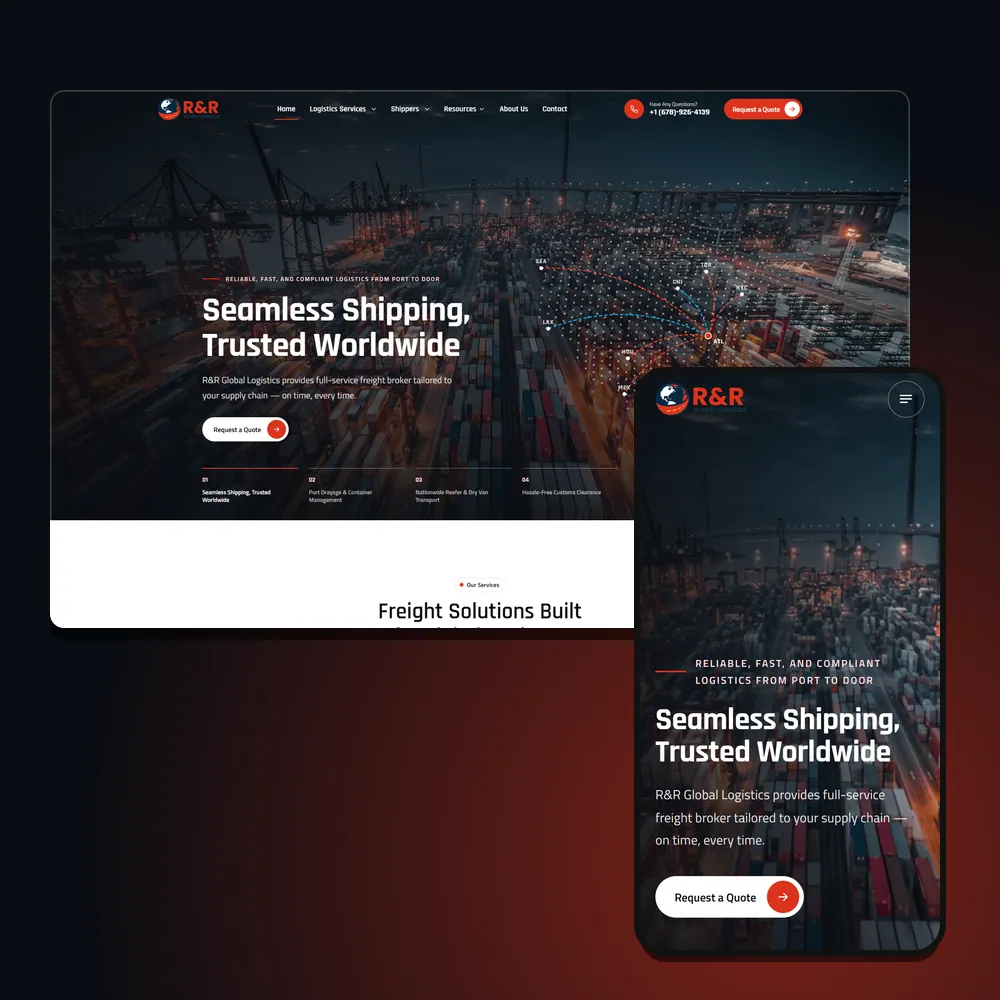
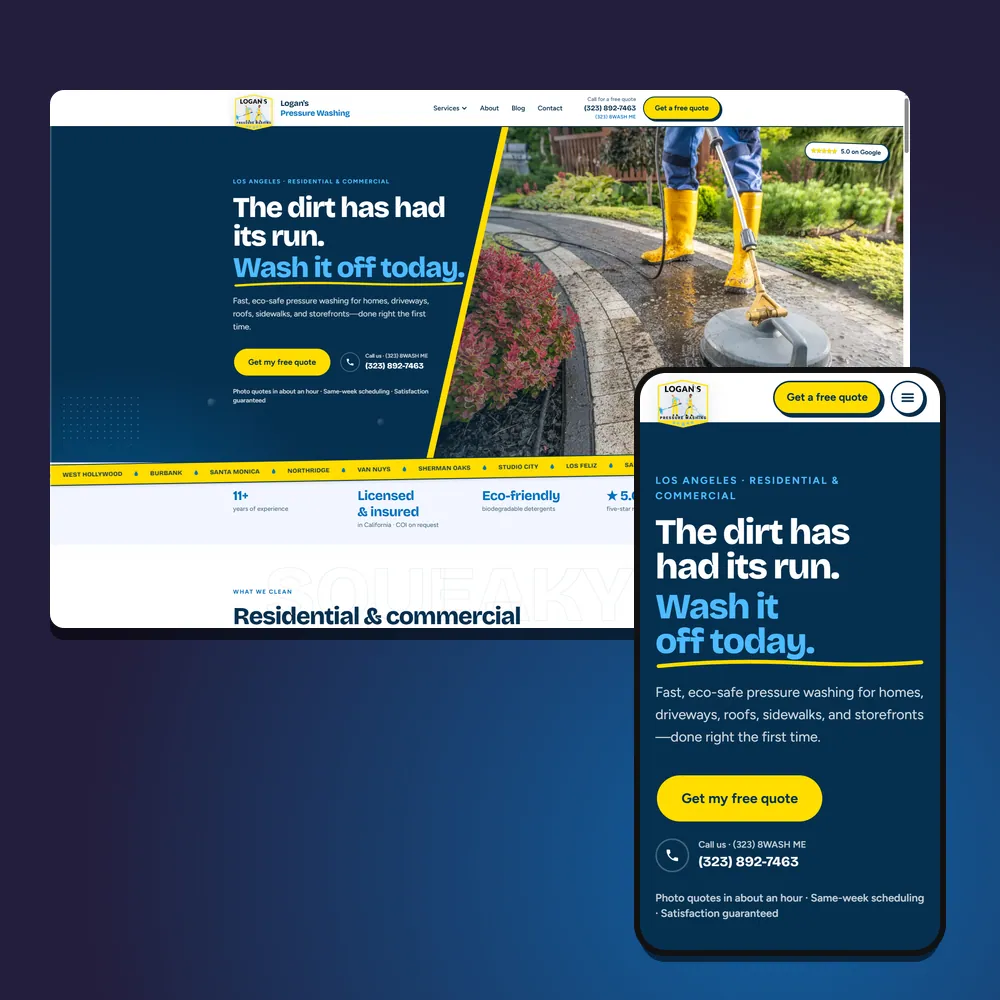
B2B Rebuilds and Quote Flows, Shipped

How it works
From first call to launch, without the guesswork
- 01
Discovery call
We start with a short call to learn your business, your customers, and what a win looks like. Then we map the exact pages and features your site actually needs.
- 02
Design the look
You see real design mockups, not vague promises. We shape the layout, colors, and imagery around your brand and refine it until it feels right.
- 03
Build and connect
We build the site to be fast and mobile-first, then wire up the tools you rely on, from booking and forms to listings and payments.
- 04
Launch and support
We take you live, check everything works, and stay on to handle updates, tweaks, and improvements as your business grows.
Pricing
Straightforward pricing, packaged or fully custom
Every project starts with a clear quote, so you know the number before any work begins and never get surprised by hidden costs. Pick our packaged get-a-new-website offer for a fast, affordable launch, or go fully custom when you need something built exactly to spec.
FAQ
Questions We Answer Every Week
At minimum: capability or product pages with real specifications, proof of quality (certifications with scope and expiry), photos of your actual facility and work, an RFQ form that captures quantity, material and drawings, and clear contact routes for sales, distributors and job applicants. Product manufacturers add a searchable catalog; companies that sell abroad add language versions and regional contacts.
The buyers are technical and the sales cycle is long. Engineers and procurement teams evaluate you on specifications, tolerances, capacity and certifications long before they talk to sales, so the site has to carry far more structured technical information than a typical business site — and turn it into quote requests rather than casual enquiries.
Yes. Uploaded files are stored privately rather than on a public path, are accessible only to your team, and can sit behind an NDA acknowledgement. For export-controlled work, storage and access follow the rules your compliance program sets, and we'll say so if a web form isn't the right channel for a particular file.
Not if it's done properly. We inventory every existing URL — product pages, part numbers and PDF datasheets included — keep the ones that work, and permanently redirect the rest to their closest new page, testing them before launch. Rankings usually dip when that step is skipped, not because of the redesign itself.
Where your system exposes an API, yes. Quote requests routing into a CRM such as HubSpot or Salesforce is common; syncing product data from an ERP or PIM is scoped per project against what your system actually supports, before anything is quoted.
Usually not. Most manufacturers sell through quotes, contracts and distributors, so a strong catalog with RFQ and sample-request routes does more than a checkout. E-commerce earns its place for standard, repeat-order parts — and we'll tell you honestly which side of that line you're on.
Yes. Each product, part family and capability should have its own page with its own URL, so each can rank for its own searches and be linked directly in a quote email. One long page listing everything ranks for nothing in particular.
It depends mostly on content: a capabilities-led site with an RFQ flow moves much faster than a catalog of thousands of parts that need clean spec data. After a scoping call, the fixed quote we send — typically within 48 hours — includes the timeline alongside the price.
Collaboration
Got a project?
Let's talk.
We're a team of creatives who are excited about unique ideas and help companies to create amazing identity by crafting top-notch UI/UX.