3D Website Design
Real-time WebGL launch pages, product showcases and brand worlds — drawn by your GPU, not played from a video file. You’re inside one right now: this page is the demo, and it’s still fast.
Scroll — the bolt travels with you
You're looking at the demo
Not a looping video — a real-time scene your GPU draws at up to 60 frames a second, reacting to your cursor, your scroll and your device.
The 3D engine is code-split to this page alone and loads after the words. Every other page here ships exactly the same bytes it did before.
Reduced-motion users, older devices and search crawlers get a designed static version — never a blank screen, never a spinner.
Why it works
People remember spatial experiences. A page that moves with them earns dwell time flat pages can't — and dwell time is what turns a visit into a conversation.
Spin it, open it, configure it. For physical products and technical platforms, one interactive model outsells a gallery of renders.
Scroll becomes a timeline. We stage your narrative in acts — problem, product, proof — and the scene carries the transitions.
What we build
A product drop, a rebrand, a moment. One page built to make noise — and to be shared.
Interactive models and configurators for hardware, vehicles, furniture, fashion — spin it, open it, choose the finish.
Campaign microsites where the site itself is the experience people talk about.
Long-form pages where the scene evolves as the reader moves — scroll becomes the timeline.
A single WebGL hero on an otherwise conventional, fast site. Most clients start here.
Try it yourself
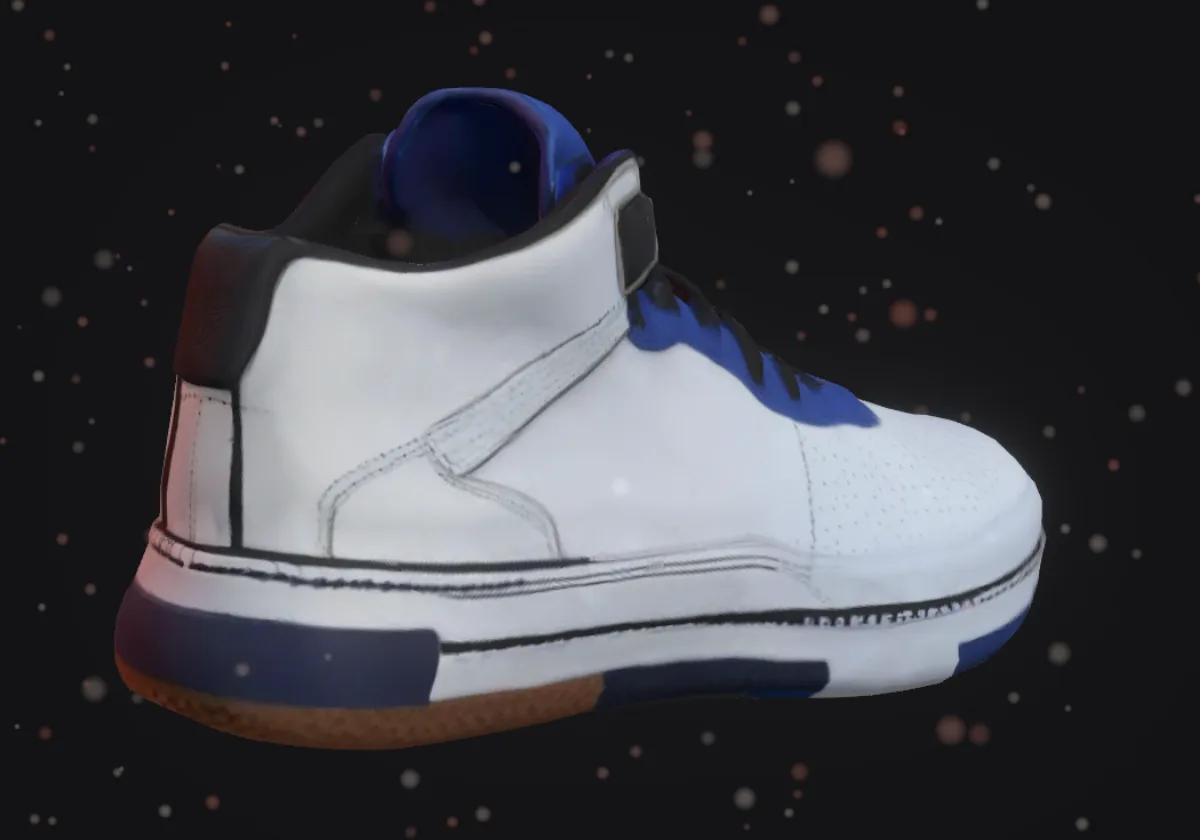
One interactive model outsells a hundred product photos. The sneaker beside this text is rendered live on this page — grab it and spin it. This is the exact experience we build for product brands: configurators, 360° showcases and launch reveals your customers can touch.
Not a video. Not a photo. A product, live in your browser.
Beautiful — and engineered
Most 3D sites fail the same way: gorgeous on the designer’s laptop, unusable on a mid-range phone. Ours ship under the same performance rules as every page we build — the rules this page is following right now:
How it happens
What's the one idea the page exists to land? We script the acts before we model anything.
Style frames and a moving prototype of the key moment — approved before the full build.
Modelling, shaders, motion and copy built together, reviewed on a live URL from week one.
Device-matrix testing, performance budgets, fallbacks and analytics — then launch.
3D, honestly
Not the rest of it. The 3D engine is code-split to the one page that uses it and loads after the text renders, so every other page ships exactly the same bytes as before. On the 3D page itself we budget performance like any launch page: content paints first, the scene streams in behind it.
Yes. The scene adapts quality to the device — resolution, particle counts and effects scale down on mobile GPUs, and devices that can't run WebGL at all get a designed static version of the page instead of a blank screen.
Everything that matters is real HTML — headings, copy, links and structured data. The 3D scene is a visual layer behind the content, not a replacement for it, so search engines and AI crawlers index the page like any other.
Usually one flagship page — a launch page, a product showcase or a campaign microsite — linked from an otherwise fast, conventional site. That concentrates the budget where it earns attention. We'll recommend the smallest version that does the job.
Typically four to six weeks: concept and storyboard first, then art direction and a moving prototype, then the WebGL build and a device-testing pass. A single 3D hero section inside an existing site is faster.
It depends on art direction, interactivity and how much of the page is 3D, so we scope it properly instead of guessing: a short discovery call, then a fixed written quote within 48 hours — numbers you can hold us to.
Tell us what you’re shipping. Short discovery call, a fixed written quote within 48 hours — and an honest read on whether 3D is even the right tool for it.
